

Text: Cheung Cho Kwan
Photo: Liou Oi Yan, Chan Lai Ching
With people from at least nine religions co-existing peacefully side-by-side in Hong Kong, many other places can learn from the city’s religious harmony.
According to the statistics provided by the Hong Kong Government, there were six major religions here with over 1,000,000 Buddhists, 1,000,000 Taoists, around 270,000 Muslims, 363,000 Catholics and some 480,000 worshipers of other Christianity denominations and of Confucianism in 2013.
The dominant religion, Buddhism, preaches non-violence, harmonious living and compassion in its main values; Islam also asserts itself as a religion of peace; Christianity emphasizes nonviolence, and maintaining and rebuilding people’s relationships with each other and with God.
Asked how Hong Kong can build religious harmony across society, Master Yǎn-cí, managing director of the Hong Kong

Buddhist Association says, “Hong Kong is a multi-cultural city, so people here are more tolerant and accept different cultures and religions.”
Noorudin Yang, the chairperson of the Islamic Cultural Association (Hong Kong) shares the same view.
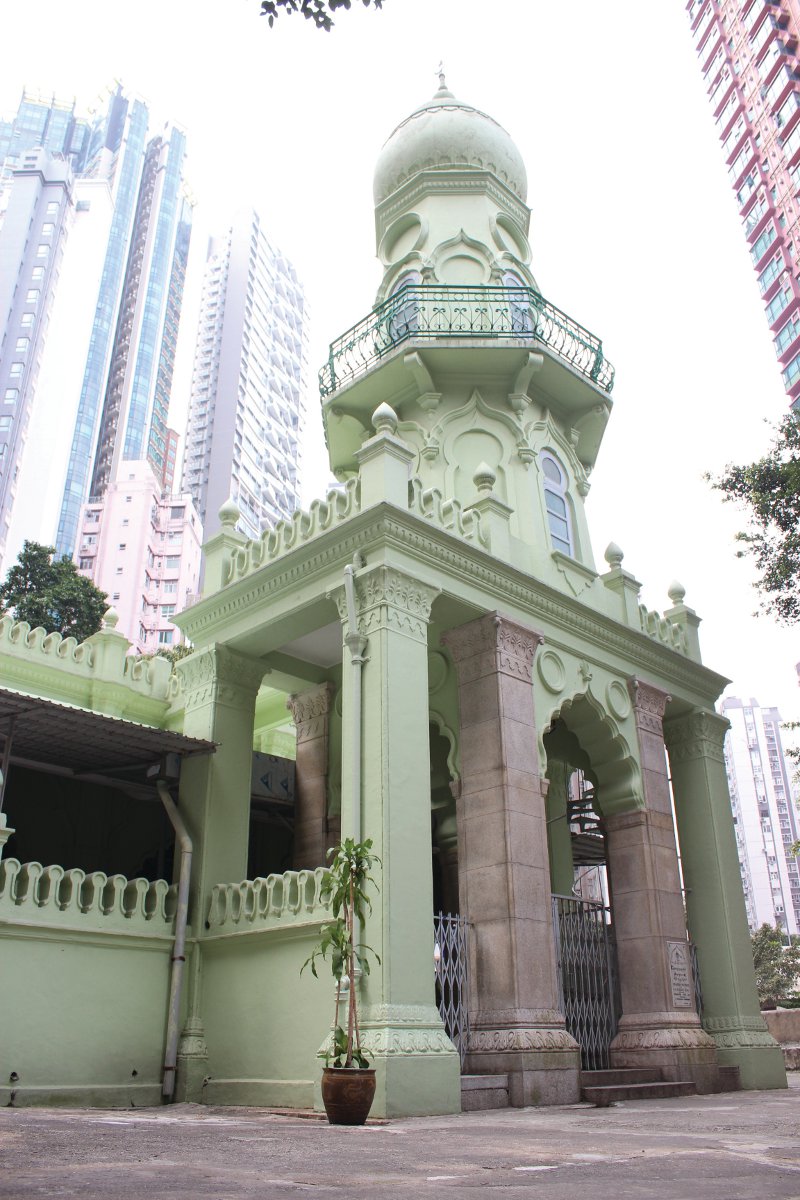
Harmony is precious as you can see in the human history. There had been countless number of religious wars. During the Middle age, the Crusades (1096-1291), which is an army led by Christian European lords fought against the Middle East, fought in an attempt to claim the Holy Land (around Jerusalem) in the name of God. Thousands of Muslims were killed.
“It is not easy to judge the Crusades as you have to take all factors such as the societal, the political and the environmental issues into considerations,” Yang says.
He then explains to the reporter that the word “Islam” itself means peace and the notion of peace in Islam is without bounds. “Faith encourages Muslims to seek the path of peace and righteousness,” he says.
Master Yǎn-cí points out that throughout history, Buddhists have never fought a religious war and that Buddhism is founded on respect for all forms of life, regardless of the religious affiliation.
Both stress that the attitudes of the six major religious leaders play a crucial role in establishing peace and understanding, and efforts such as colloquiums and exchange visits which have been held once a year since 1978, should become more frequent.
With a diverse society such as Hong Kong, interfaith marriages are gradually becoming a norm. Master Yǎn-cí says that Buddhism does not restrict people from marrying those of other faiths as it respects the choices of all humans.
On the other hand, Mr. Yang says, “Muslims should find a life partner of the same faith in order to promote long term harmony within the relationship.”

“Islam regulates your life partner should be Muslim, it doesn’t mean Islam does not respect other religions. Islam does not force people to be Muslim if they want to marry Muslims, but they should begin a path towards understanding our religion,” he explains.
Pastor Leung Wing Sin from Remembrance of Grace Church Tai Po Church holds a similar view, “If couples have the same values, it will help them face life’s challenges.”
He uses his experience as an example, “28 years ago, I chose to open a church in Tai Po. It was difficult to start and my salary decreased by more than half. My wife completely supported me as we are both Christians and believe that money is not the important part of life.”
Different religions can harmoniously live here, the most important factor is that, “The majority of the population of Hong Kong is Chinese and the Chinese culture value tolerance; they don’t resist religions,” says Master Yǎn-cí.
Mr. Yang believes that the legal system of Hong Kong is also an important factor in fostering religious amicability. “The Basic Law of Hong Kong declares that all Hong Kong residents are equal before the law, meaning everyone must observe law and order, no matter what your nationality or faith you have.”
On the contrary, Master Yǎn-cí thinks that the Hong Kong Government does not play an important part in developing religious harmony. She points out that there is no religious policy set forth by the Government, and that it neither favors nor rejects any religion.

