

Hong Kong is a city of expensive housing, which has forced some consulates to move out from Central, as rents of the district rose by about 40% within two years. What about German Consulate General?
Text: Cheung ChoKwan / Photo: Liou Oi Yan, Chan Lai Ching
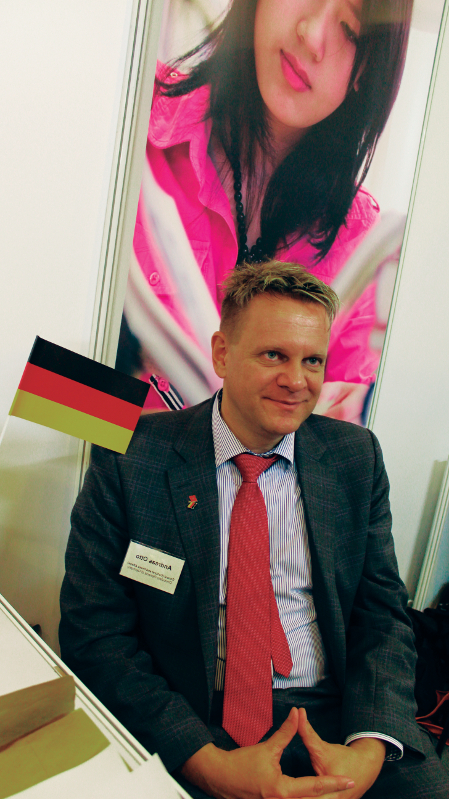
“Hong Kong is attractive to us. We are not thinking of leaving. If we searched for an alternative location within Hong Kong, we would want a place that is not too expensive, but still has a good environment and great accessibility, such as Wan Chai or Tai Koo.”
Andreas Otto, Consul for Culture and Press Affairs of the German Consulate General in Hong Kong, spoke to our reporter earlier at the European Higher Education Fair at Hong Kong Central Library where universities from Germany were strongly presented.
According to Takungpao, a local newspaper, two consulates, namely the Canadian and Swiss consulates relocated in 2012, as they were not willing to pay such high rents.
Mr. Otto, having lived here for two years, thought this is a natural consequence of Hong Kong’s typical commercial approach. “A company can afford high rent if it can make profits, otherwise, it has to leave,” he added.
The German Consulate Generall* in Hong Kong was established in 1953 – just four years after the Federal Republic of Germa
ny came into being as an independent country during the Cold War era. Now Germany is Hong Kong’s largest European trading partner with a trade volume of HKD$ 135 billion in 2013, according to the Hong Kong Economic and Trade Office, Berlin.
Mr. Otto estimated that today there are around 3,000 Germans in Hong Kong, but he cannot be sure, as the German Consulate General does not require Germans living in Hong Kong to register.
“Rent here is ridiculously high. Many small businesses, suffer financially. It seems that very low taxes in Hong Kong are offset by sky-high rents.”
When asked whether young Germans face the same housing problems as young Hongkongers, Mr. Otto said, “The problem of rent is not as dramatic for young Germans as for Hong Kong youths.” He explained that Germany is a diverse country with several centers. There are around 350 – 400 institutions of higher education in Germany, many based in smaller cities that are attractive to youngsters, in addition to the popular but expensive hubs like Berlin or Munich.
German expat Jens Roesler is the Deputy Director and the Head of the Language Department of the Goethe-Institut (named after the country’s most famous poet), Germany’s cultural institute in Hong Kong. He has lived in Hong Kong for two years, and before in Shanghai for five years. He held similar views, “Germany is a large country in contrast to Hong Kong, Germans do not need to live in the center of an expensive city. Instead, they can choose to commute between home and their workplace.”
Fabian Lischka, a German citizen who has worked in a bank in Hong Kong for six years, said, “Rent here is ridiculously high. Many small businesses, such as restaurants, suffer financially. It seems that very low taxes in Hong Kong are offset by sky-high rents. Interestingly enough, rental yields are not high, which means that house prices are extraordinarily high, too.”
Mr. Roesler said, “I understand that Hong Kong is economy-driven. People want to have a good job, so they can afford housing, food, etc. But more importantly, people must have a good cultural foundation, in art, creative works, and literature because the quality of life is not only measured by money. It’s these other things not affecting GDP that help create a happy and harmonious society.”
“The fundamental importance of his humble gesture is his acceptance of responsibility, his acknowledgement of the suffering, and his asking for forgiveness.”
When asked whether Hong Kong youths concentrate too much on pursuing materialistic life, he reaffirmed that Hong Kong is business-driven; thus many young people are pushed into lucrative careers by their parents. Although some young Germans are also forced to do this, the pressure is not as extreme as in Hong Kong. They can choose humanities, arts or philosophy.
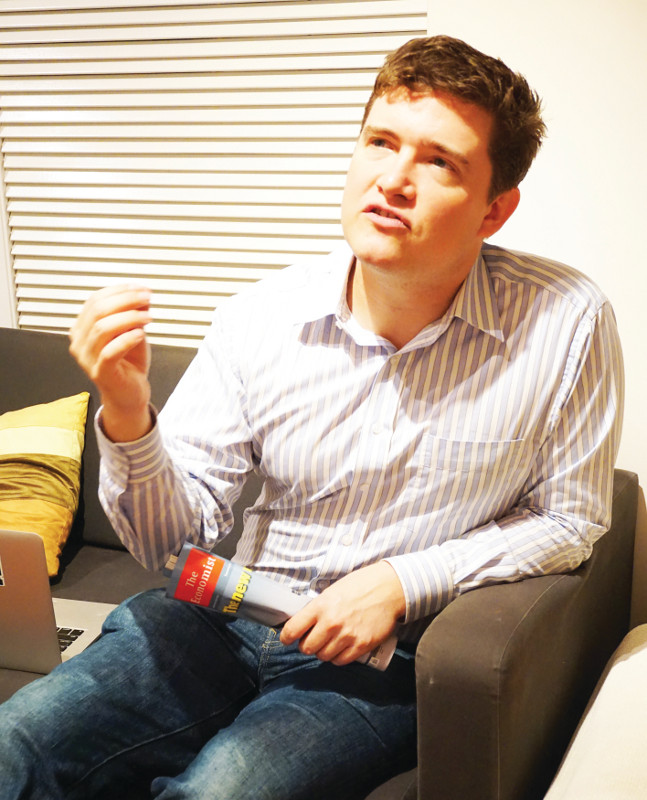
Mr. Otto thought that there is on major difference in the pursuit of life between German and HongKong youngsters. After completing secondary school, many Germans engage in a variety of things before starting their careers, such as participating in non-profit endeavors, pursuing volunteer work or traveling abroad. In contrast, most Hong Kong students opt to start their careers immediately after leaving school. “The pressure to start your career earlier is high in Hong Kong due to the expensive housing situation,” he said.
He was keen to point out the Germany’s cultural diversities. “If you want to learn about German culture, come and have a look at the Goethe-Institut. It holds professional language classes at moderate fees, a library, movie screenings and more. The Hong Kong office of the German Academic Exchange Service will be more than happy to show you how to take up studies in Germany.”
While Germany’s youngsters suffer less economic pressure today, they have a historic burden to deal with. One aspect of Germany’s attitude today appreciated by many Hong Kong people, even the international society, is their willingness to admit and repent the mistakes made in World War II.
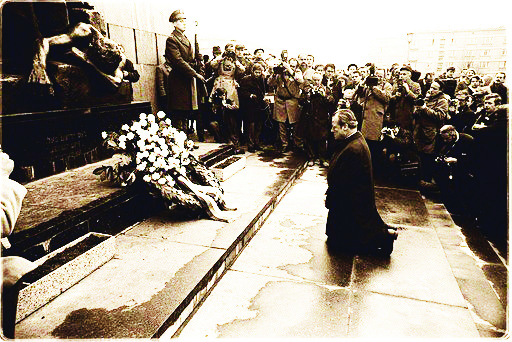
On December 7, 1970, then West German Chancellor Willy Brandt visited a monument to the Nazi-era Warsaw Ghetto Uprising in Poland. After laying down a wreath, Brandt, to the surprise of all, knelt to the monument spontaneously. It has come to be known as the Warsaw Genuflection.
“It is a phenomenally powerful image, and it still brings tears to my eyes,” Mr. Lischka said. “The fundamental importance of his humble gesture is his acceptance of responsibility, his acknowledgement of the suffering, and his asking for forgiveness.”
“Provocation can be brave, but the result of provocation is sometimes not what you desire.”
Mr. Roelser held similar views, “After a war, countries choose how much of this history they should cover in textbooks. We are open and transparent, speaking about our past in movies, literature, and textbooks. I think it is important to teach people about the history of Germany, the wars, the separation. Now we have a good relationship with our neighbours because we are open to discuss our past to prevent history from repeating itself,” he added.
Mr. Otto further said, “To be brave is good, but you also have to be smart. Be brave, but at the same time think about what is to follow. Provocation can be brave, but the result of provocation is sometimes not what you desire.”

