
Lai Kwan Yee and Wong Man Ching
I think there is a line you don’t cross, but it just sort of depends
“What is investigative reporting?” Grimaldi kicked off with the question to some would-be journalists, saying all reporting should be some sort of investigative reporting, but not really every reporting falls into the category.
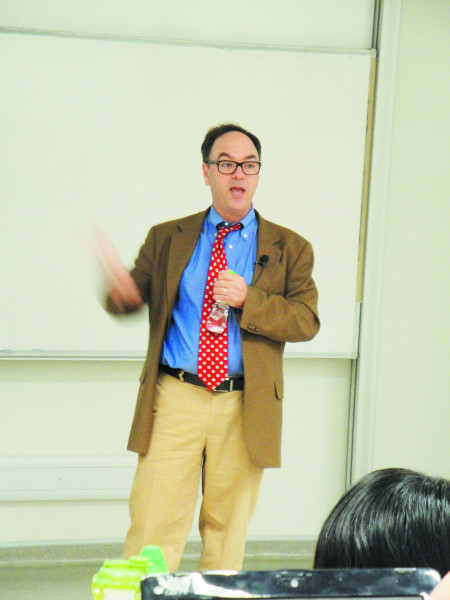
Mr. James V. Grimaldi, member of the 2006 Pulitzer Prize winning team of Investigative Reporting category, senior writer at the Wall Street Journal talked about covering American Politics to some would-be journalists last month at a public forum hosted by the Department of Journalism of the Communication School, Hong Kong Baptist University.
He focused on how U.S. reporters used investigative techniques to do background checks on candidates, examined fundraisings and scrutinized government actions. “One of the classic ways in which investigative reporters looked at campaigns is through political fundraising finance reports.”
He referred to the project he did about the campaign of George W Bush. When Bush first ran in 2000, a program called “Pioneers” was created, and it was the most successful fundrai sing campaign in U.S. presidential history.
He found that many of the pioneers were from the energy and oil industry, so they were looking for positive regulatory relief and policies that were promoted, to make oil and energy more profitable.
In other words, they were going to get something in return if Bush was elected. Others got jobs, as they were hired by the Bush Administration. And Grimaldi found out that 40% of those people (104 out of 246) actually got a job or an appointment, while 23 of those pioneers became Ambassadors.
When Grimaldi was asked about the ethnics of using an undercover video taken at a private gathering, he concluded: “But at the end of the day, I think everything is a case by case basis, I think there is a line you don’t cross, but it just sort of depends.”

